








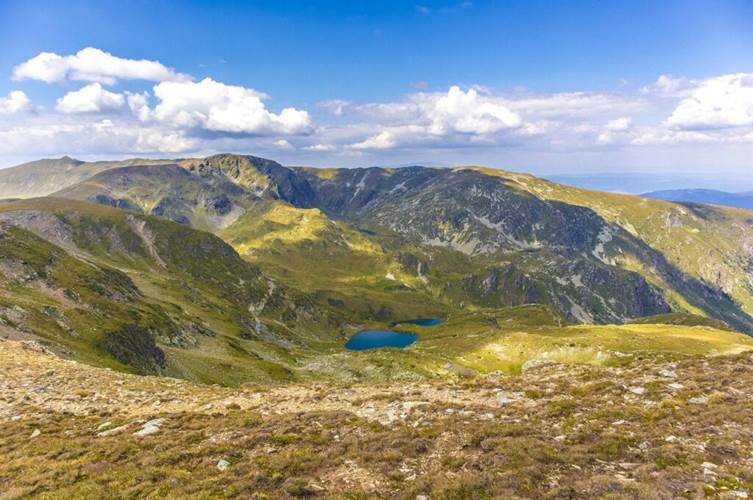
High in the Rila Mountains, the tallest range in Bulgaria and the Balkans, seven glacial lakes step down a mountain bowl and mirror the sky on a still day, which is how the Seven Rila Lakes got their old nickname, seven mirrors in the sky. They sit between roughly 2,100 and 2,500 metres, linked by a single loop trail. The good news for most travellers is that this is a day trip from Sofia, not an expedition. A chairlift lifts you most of the way up, and the full circuit takes about half a day. We walked it in early autumn, and this is what we wish we had known first, the real costs, the route lake by lake, and when to go.
What are the Seven Rila Lakes?
They are seven named glacial lakes in Rila National Park, each shaped by ice and named for what it looks like. They lie in a stepped bowl, so the trail climbs from the lowest to the highest and you gain height with almost every lake. The names, heights and quick descriptions are below, listed from the bottom of the walk to the top.
| Lake | Height | What stands out |
| The Lower Lake | 2,095 m | First lake by the lift, sits in flatter ground with grazing horses nearby |
| The Fish Lake | 2,184 m | Shallowest of the seven, so it takes the strongest colour in sun |
| The Trefoil | 2,216 m | Named for its clover shape and wandering, squiggly edges |
| The Twin | 2,243 m | Largest lake, pinched in the middle so it looks like two joined pools |
| The Kidney | 2,282 m | Bean shaped, flat ground around it makes the best picnic and rest stop |
| The Eye | 2,440 m | Deepest at about 37.5 m, an almost perfect oval of dark blue |
| The Tear | 2,535 m | Highest and clearest, the viewpoint above it shows all seven at once |
The postcard photo, all seven laid out below you like beads on a string, comes from the ridge above The Tear, not from the lakeshore. Budget the extra climb if you want it.
How do you get to the Seven Rila Lakes from Sofia?
The trailhead is above the village of Panichishte, near the spa town of Sapareva Banya, about a two hour drive south of Sofia. You reach the lakes from the top of a chairlift, so however you travel, you are aiming for the lower chairlift station first. There are three sensible ways to do it.
| Option | Time and cost from Sofia | Best for |
| Guided or transfer tour | 10 to 12 hours, roughly 55 to 80 euros plus the chairlift | Most first-timers, no driving or bus changes |
| Rental car | About 2 hours each way, car from around 11 euros a day plus fuel and insurance | Early starts, flexibility, pairing with other stops |
| Bus plus taxi | Bus to Dupnitsa about 2 hours, then a taxi or shuttle up | Budget travellers happy to plan and negotiate |
A tour is the easiest choice if you are based in the capital and do not want to drive, and the day-trip operators run from Sofia most of the year. Driving means picking the car up the night before and leaving early, because the car park and the lift queue both fill by late morning on summer weekends. For the public route, take a bus with Union Ivkoni from Sofia’s central bus station to Dupnitsa, then a taxi up to the lift. Trains and small-town buses in Bulgaria are fine between big cities but thin out fast for a trailhead like this one, so build in extra time if you go without a car.
Chairlift price and opening times
The Panichishte chairlift does the hard climbing for you and drops you a short walk below the Lower Lake. It is the single most important thing to plan around, because if the lift is shut there is no easy way up. Here is what to know for 2026.
| Detail | 2026 information |
| Return fare | About 16 euros for adults, roughly half price for children |
| Ride time | Around 20 to 25 minutes each way |
| Payment | Bring cash, card machines at the lift are unreliable with poor mountain signal |
| Winter hours | About 9:00 to 16:30, later start near 12:30 on Mondays |
| Summer hours | Usually open about an hour longer than winter |
| Regular closures | Last Monday of each month for maintenance |
| Longer closures | Roughly two weeks in mid-April or early May, and two weeks in October |
Bulgaria joined the euro in 2026, so ignore any older guide still quoting the fare in lev. Check the official chairlift timetable before you set off if your dates fall near those spring or autumn maintenance windows, since a wasted two hour drive to a closed lift is the usual Rila mistake.
The Seven Rila Lakes hike, lake by lake
From the top of the lift, the main walk is a loop of about 8.4 kilometres with roughly 500 metres of climbing, and most people take three to five hours including photo stops and a rest. The path is well marked and busy in season, so you will rarely feel lost. It is a mountain walk rather than a stroll, with rocky sections and one steeper pull near the top, but a reasonably fit beginner can manage it.
You start at the Lower Lake, just above the lift, then climb past the Fish Lake and the clover-shaped Trefoil. The Twin comes next, the biggest of the group, followed by the Kidney, where the flat ground makes the natural place to stop and eat. The last push takes you to the Eye, the deepest lake, and finally the Tear, the highest. Strong walkers carry on up the ridge above the Tear for the view of all seven together, then loop back down the other side of the bowl to the lift.
When time is short or the weather turns, the lower five lakes still make a satisfying half loop, and it is the top two that cost the most effort. Turning back at the Kidney is a fair call on a bad day rather than a failure.
How hard is the hike and what should you pack?
Call it moderate. The distance is short and the lift removes the worst of the climb, but you are above 2,000 metres, the weather changes fast, and the rock underfoot is uneven. People come unstuck by treating it as a casual outing in trainers and a t-shirt, then getting caught by afternoon cloud and cold wind at the top.
- Proper shoes with grip, trainers slip on the wet rock near the higher lakes
- A warm layer and a waterproof, even in July, the summit lakes are much colder than the car park
- Sun cover, the altitude burns quickly on clear days
- At least a litre and a half of water each, and food, there is only a basic hut for snacks
- Cash for the lift and the hut
- An early start, both for the light and to beat the lift queue
When is the best time to visit the Rila Mountains?
The short answer is July to September for the hike itself, when the trail is clear of snow and the lift runs daily. Each season is different, so pick by what you want.
| Season | What it is like | Good to know |
| July to September | Clear trail, daily lift, full loop open, wildflowers early on | Busiest, so start early on weekends |
| Late May to June | Green and quiet, some snow lingers up high | Check the lift is past its spring maintenance |
| October | Autumn colour, thinning crowds | Lift often shuts for two weeks, confirm dates |
| November to April | Snow-covered and beautiful from below | Full loop is for experienced winter hikers only |
For the best mix of open trail and thinner crowds, aim for the first half of September. The water still holds a warm tone in the light and the peak-summer coach traffic has eased.
Should you add Rila Monastery to the trip?
Rila Monastery, the tenth-century UNESCO site with its striped arches and painted church, sits in the same mountains and many tours pair it with the lakes. It is a genuine highlight, but honestly the two together make a very long day, often twelve to thirteen hours, and the combined tours sometimes give you only enough time for five of the seven lakes. When both matter to you, give the monastery its own half day rather than bolting it onto a full hike.
Where should you stay near the Seven Rila Lakes?
Most people visit on a day trip, but staying the night nearby lets you reach the first lift and catch the early light before the crowds. There are three sensible bases.
- The Rila Lakes Lodge, up by the lakes and recently refurbished, for hikers who want to be on the trail at dawn or to camp in the designated areas nearby
- Panichishte, right by the lower chairlift, for the shortest morning start
- Sapareva Banya, a hot-spring spa town ten minutes below, for a comfortable hotel and a soak after the walk
Sapareva Banya is the easiest all-round choice, close to the lift with proper hotels and the added draw of the thermal spas. It also works as a stop on a wider Bulgaria route, either heading on to the Black Sea coast or back to the city for more banitsa and shopska salad.
What to skip
A few things are not worth your energy. Do not try to combine the full lakes loop and Rila Monastery in one self-driven day, the timing is too tight and you will rush both. Skip the walk entirely in low cloud, the whole point is the reflections and the all-seven view, and neither shows up in fog. Do not count on paying by card, at the lift or the hut, bring cash. And do not bother with the last Monday of the month or the shoulder-season maintenance windows without checking the lift is running first.
The Rila Mountains are one of the easiest big-nature days in Europe, and the Seven Rila Lakes are the reason most people come. Plan the lift and the weather, start early, and you get one of the best views in the Balkans for the price of a half-day walk. At VayCay Couple it is the first mountain day we point people to in Bulgaria.
FAQs
The main loop from the top of the chairlift is about 8.4 kilometres with roughly 500 metres of ascent, and takes most walkers three to five hours with photo and rest stops.
Around 16 euros return for an adult in 2026, with children about half price. Bring cash, as the card machines at the lift are unreliable.
Yes. It is about two hours each way, and a day-trip tour or an early car start both give you enough time for the full loop and the drive back.
No. The loop is well marked and busy in season, so most fit walkers manage it alone. A guided tour mainly saves you the driving and the logistics.
It is moderate. The lift removes most of the climb, but the altitude, the changeable weather and the rocky ground mean it is not a casual stroll. Proper shoes and a warm layer make a big difference.
It shuts the last Monday of each month for maintenance, plus about two weeks in mid-April or early May and two weeks in October. Winter running is limited, so check the official timetable near those dates.