







Two things pull us back to Rhodes, the walled medieval old town and the beaches that ring the rest of the island. This Rhodes travel guide is our way through it, the old town, Lindos, the beaches, the food and the timing. We at VayCay Couple have spent proper time on the island rather than one hotel week, and we kept it simple and practical. We checked the prices, all in euros, in September 2026, which matters here because the big sights jumped in cost in 2025.
What makes Rhodes special?
Rhodes, Greece is the biggest of the Dodecanese islands, out in the south-east Aegean near the Turkish coast, and it does more than a beach week. There is a genuinely great medieval walled town, the clifftop village of Lindos, a string of beaches for every taste, and hot, reliable sun across spring, summer and autumn. Rhodes was also home to the Colossus, one of the Seven Wonders of the ancient world, a giant bronze statue that stood near the harbour until an earthquake toppled it. Nothing of it survives, but Mandraki harbour, where two bronze deer now mark the spot, is a pleasant walk. It also has direct UK flights all summer, which makes it one of the easier Greek islands to reach.
Rhodes Old Town, the medieval city
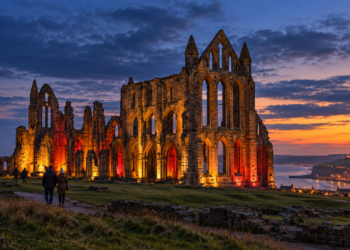
The old town is the reason we rate Rhodes over a lot of islands. Rhodes old town is the largest lived-in medieval town in Europe, a full ring of walls, cobbled lanes and Ottoman and Byzantine layers, and UNESCO lists the whole thing. Start at the Palace of the Grand Master, the Knights’ fortress rebuilt by the Italians, which now costs about 20 euros to enter after the 2025 price rise. Walk the Street of the Knights, the straight cobbled lane of the old national lodges, which is free and best early or at dusk. Add the Archaeological Museum in the old Knights’ hospital, the Jewish quarter with the Kahal Shalom synagogue, the oldest in Greece, and the market on Socrates Street, then just get lost in the lanes. Give it a full day, and stay a night inside the walls if you can, as it empties beautifully once the cruise crowds leave.
Lindos and the island’s other sights
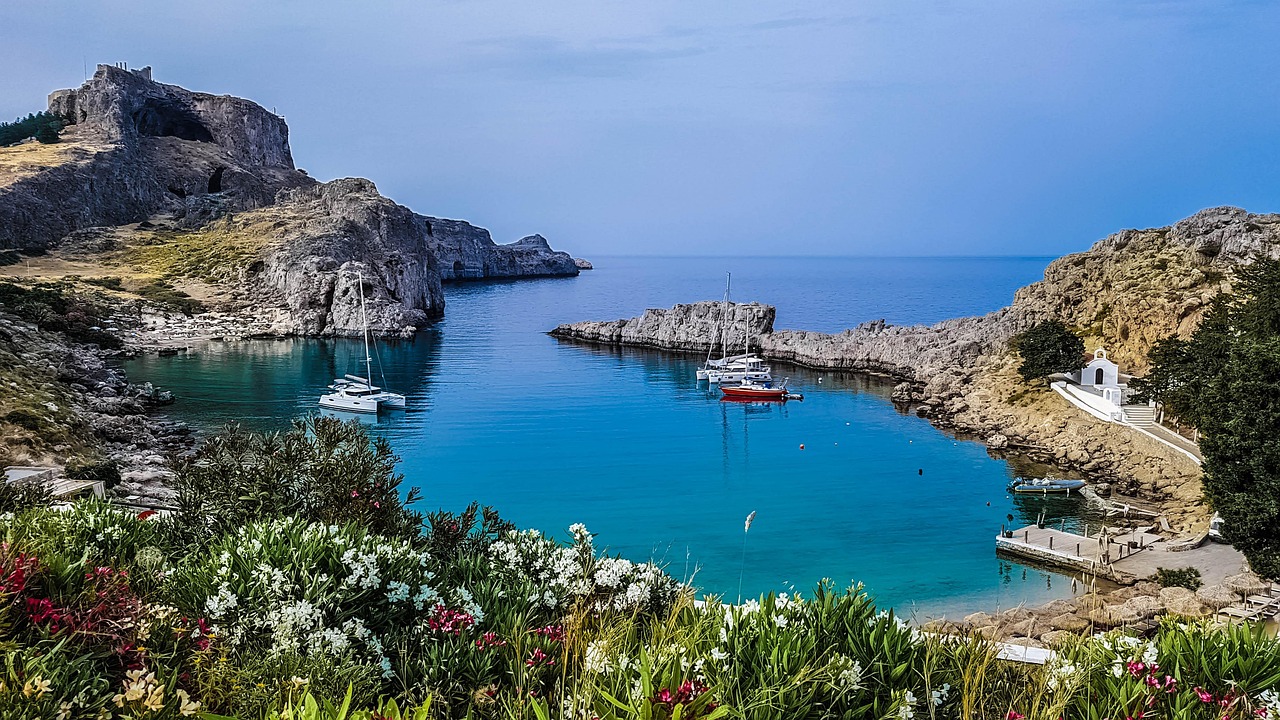
Lindos Rhodes is the postcard village, an hour south, white houses stacked under a clifftop acropolis with the sea on both sides. The Lindos acropolis costs about 20 euros in summer and 10 in winter, and the climb is steep, so go early. The village is car-free, so you park or bus in and walk, and the donkeys that once carried visitors up still wait at the bottom, though your feet are kinder to them. Elsewhere on the island, the ancient site of Kameiros is a quiet hillside Hellenistic town, Tsambika Monastery sits at the top of 300 steps for the best view on the east coast, and the Valley of the Butterflies fills with Jersey tiger moths in high summer. Prasonisi at the southern tip is a sandbar between two seas and a kitesurfing hotspot.
| Sight | What it is | Rough cost |
| Palace of the Grand Master | Knights’ fortress, old town | ~20 euros |
| Street of the Knights | Medieval cobbled lane | Free |
| Lindos Acropolis | Clifftop ruins over the sea | ~20 euros (10 winter) |
| Kameiros | Hellenistic hillside town | ~6 euros |
| Valley of the Butterflies | Moth-filled gorge, summer | ~5 euros |
| Tsambika Monastery | 300 steps to the view | Free |
The best beaches in Rhodes
Rhodes beaches run right around the island, so pick by wind. The east coast is calmer and sandier, the west windier and better for surfers. Elli, in Rhodes Town, is the easy city beach with loungers and a diving platform. Anthony Quinn Bay is a small rocky cove made for snorkelling. Tsambika is the long soft-sand family beach below the monastery, and St Paul’s Bay is the near-enclosed cove under Lindos, calm enough for weak swimmers. On the west side, Ialysos and Prasonisi are where the windsurfers and kitesurfers go, and Glystra is a small sheltered curve if you want quiet. Faliraki has the biggest resort beach, with watersports and a waterpark behind it.
| Beach | Type | Best for |
| Elli, Rhodes Town | Pebble and sand | Easy city beach, diving board |
| Anthony Quinn Bay | Rocky cove | Snorkelling, clear water |
| Tsambika | Soft sand | Families, shallow entry |
| St Paul’s Bay, Lindos | Sheltered cove | Calm swimming, scenery |
| Prasonisi | Sandbar, two seas | Kitesurfing and windsurfing |
What else is worth doing?
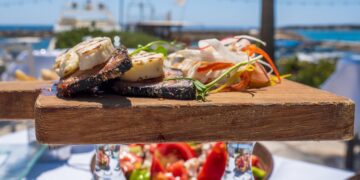
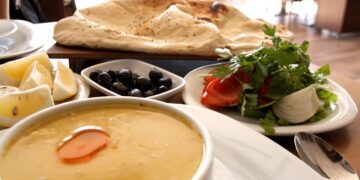
Once you have done the old town and Lindos, the things to do in Rhodes fill a week easily. Take the morning boat to the little island of Symi, about 25 to 30 euros return, for its painted harbour, soak at the restored Kallithea Springs for about 5 euros, walk the shaded Seven Springs at Epta Piges, or drive up to the hill village of Embonas to taste the island’s best wine. Foodwise, Rhodes does Dodecanese cooking well, and our notes on Greek food runs through the dishes to look for across here and Kos, the next island north.
How long do you need, and a simple plan
With a week, we would give two days to the old town and the Rhodes Town beaches, a day to Lindos and St Paul’s Bay, a day on a boat to Symi, and the rest split between the quiet east-coast beaches and one inland trip to Kameiros or Embonas. Four days is enough for the old town, Lindos and a couple of beaches if you are short. Base yourself once and day-trip out rather than moving hotels, as the island is bigger than it looks and the drive between town and Lindos is a good hour.
Is Rhodes pricey?
Rhodes is mid-priced for a Greek island, dearer than the mainland but cheaper than Santorini or Mykonos. Dinner for two with wine at a taverna runs about 35 to 55 euros, a gyros around 4, and a coffee 3 to 4. Rooms swing with the season, roughly 50 to 80 euros for a guesthouse and 100 plus for a sea-view hotel in Lindos or Ixia in peak summer. The sights are what has jumped, with the two acropolis tickets now 20 euros each, so a culture-heavy trip adds up.
Where’s good to eat in Rhodes?
Rhodes eats well, from old-town tavernas to smarter places in Lindos, with a taverna dinner for two about 35 to 55 euros. The places below are our regulars, and for the seafront spots in Ixia just west of town, we wrote those up on their own. Book Mavrikos in Lindos in summer.
| Place | Address | Order this | Notes |
| Taverna Kostas | Pythagora 62, Rhodes Old Town | Grilled octopus, gigantes beans | Family-run, since the 1970s |
| Mavrikos | Main Square, Lindos | Sea bream, goat in wine | Upscale, since 1933, book ahead |
| To Steno | 29 Agion Anargyron, Old Town | Pitaroudia chickpea fritters | Courtyard, home cooking |
| Manolis Taverna | Apollonos 18, Faliraki | Clay-pot goat, jug wine | Garden, family spot |
Where’s the best base on Rhodes?
Your base changes the whole trip. The Old Town is best for history and atmosphere, with small hotels in medieval buildings, though it is cobbled and short on parking. Lindos is prettier and quieter but an hour from the airport and car-free. Faliraki is the budget beach-and-nightlife strip, and Ixia and Kallithea just west of town are the resort zone with the big sea-view hotels. Faliraki and Kallithea are about 20 minutes from the airport and Lindos a full hour, so factor the transfer if you have an early flight. We stay in the Old Town for a city-and-culture trip and near Lindos for a slower beach week.
Getting there and around
Rhodes airport (RHO) is 14km south-west of the town and gets direct UK flights all summer. The RODA airport bus into Rhodes Town costs about 2.50 euros and runs roughly every half hour. Two bus networks cover the island, blue-and-white RODA for the town and west coast and orange-and-green KTEL for the east coast, including Lindos and Faliraki, at up to about 9 euros a ride. Buses reach the main spots but are slow, so for the quieter beaches and the mountain villages a hire car, around 35 to 55 euros a day, is worth it. Remember Lindos itself is car-free.
When is Rhodes warm enough to swim?
The best time to visit Rhodes is in May and June, or September into early October, when it is hot but not fierce, the sea is warm and the old town is not jammed with cruise passengers. July and August hit the mid 30s and are busiest and dearest, though the meltemi wind takes the edge off on the east coast. Winter is mild and cheap but quiet, with many Lindos tavernas and hotels shut from November, so it suits a town-and-history break rather than a beach one.
Sleep inside the walls, give a day to Lindos and hire a car for the quiet beaches. The official Visit Greece site has current opening times and ferry links before you book. Kalo taxidi.
FAQs
Yes, and more than most package islands. The medieval old town and Lindos give it real depth on top of the beaches and sun, so it works for history and lazing in equal measure. Give it a miss only if you want a tiny, undeveloped island with nothing to see.
A week is a good fit, enough for the old town, Lindos, a few beaches and a boat trip to Symi without rushing. Three or four days covers the highlights if you are short, but the island is better at a slower pace.
Yes. The east-coast sand beaches like Tsambika and the resorts around Faliraki and Kallithea suit children, the sea is warm and shallow in spots, and the car-free old town is a good wander. Long transfers are the only real downside if you stay far from the airport.
Rhodes has the far better old town and more to see, so it wins for a mix of culture and beach. Kos is flatter, smaller and easier to cycle, and better if you mostly want a relaxed beach week. Many people do both, as they are a short ferry apart.
Not to stay in the town or in Lindos, both walkable and bus-linked. For the west-coast beaches, Kameiros and the hill villages, a car saves a lot of waiting, since buses out there are slow and infrequent.