









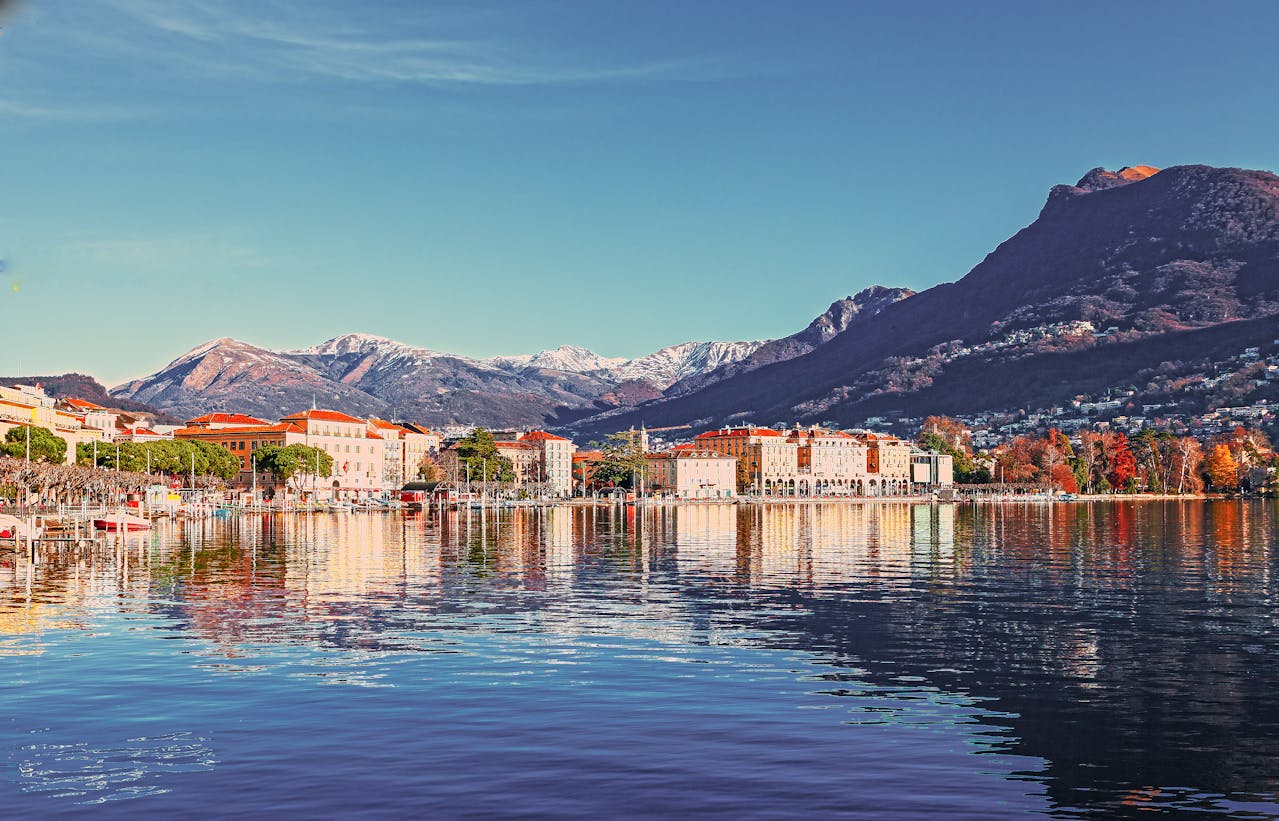
Palm trees, a lake the colour of the Med and menus written in Italian, Lugano feels more Milan than Zurich, which is the appeal of Switzerland’s sunniest corner. Two days is enough to see the best of it, and the best things to do in Lugano split neatly between a lake, two mountains and a compact old town. VayCay Couple spent a weekend working out the ideal 48 hours, with real prices in Swiss francs, transport, and the one ticket that makes it all cheaper. Written and checked in July 2026.
Is Lugano worth visiting?
Yes, especially as a slower, sunnier stop on a Switzerland or northern-Italy trip. Lugano sits in Ticino, the Italian-speaking canton, so you get Swiss order with Italian food, coffee and climate, wrapped around a glacial lake ringed by mountains. It is not a big-sights city, the pleasure is the setting, the two funiculars and the lakeside, so two days suits it better than a week. Search the top things to do in Lugano Switzerland and the same shortlist recurs, the lake, the two funiculars and the old town. If you want to know what to do in Lugano beyond the postcard, the list below is what actually fills a good weekend.
The best things to do in Lugano
Start with the two mountains, because the views make the trip. The Monte San Salvatore funicular climbs the pyramid-shaped peak south of the city to a 360-degree summit looking over Lake Lugano to Monte Generoso and the Italian enclave of Campione, the single best view in the area. On the other side, the Monte Bre funicular reaches one of the sunniest points in Switzerland, with a walk down through the artists’ village of Bre. Back in town, Parco Ciani is the lovely lakeside park, and the LAC arts centre houses MASI, the regional art museum, worth an hour whatever is on. Wander the porticoed old town and the smart shopping arcade of Via Nassa, then take a boat out on the lake, the classic trip is to Gandria, a car-free village clinging to the shore that you can also reach on foot along the Sentiero dell’olivo, an easy olive-tree trail. These are the Lugano attractions worth your two days.
A 48-hour Lugano itinerary
Day one, ride the Monte San Salvatore funicular first thing for the clearest views, come down and stroll Parco Ciani and the lakefront, and give the afternoon to the old town and Via Nassa with a long Ticinese lunch of risotto or fresh lake fish. Take the boat to Gandria for the early evening and eat dinner by the water. Day two, go up Monte Bre and walk the village, then give the afternoon to LAC and MASI or a day trip along the lake. This Lugano itinerary keeps each mountain to a half-day so you are never rushing a funicular.
Day trips from Lugano
With more time, the easiest Lugano day trip is Morcote, the so-called pearl of the Ceresio, a photogenic lakeside village of arcaded houses south of the city, often paired with the Scherrer Park gardens. Families like Swissminiatur at Melide, a park of scale-model Swiss landmarks. Carona, on the slopes of Monte San Salvatore, has the exotic Parco San Grato. And because the border is minutes away, Lake Como and Milan are both under an hour by train, which makes Lugano an easy add-on to an Italian trip.
Getting to Lugano
Lugano is well connected by train, which is the stress-free way in. From Milan it is about an hour, from Como around 40 minutes, and from Zurich roughly two hours through the Gotthard Base Tunnel, the world’s longest railway tunnel. The station sits above the centre with a short funicular down to the lakefront. Book Swiss trains in advance on SBB, where saver fares cut the price sharply, and check routes and events on the official Lugano Region tourism site.
Costs, and the Ticino Ticket that saves money
Lugano prices in Swiss francs and, like the rest of Switzerland, it is not cheap, budget roughly 200 to 400 francs a day for a couple with meals and activities. The funiculars run about 30 francs return each. The money-saver most visitors miss is the Ticino Ticket, given free by hotels, hostels and campsites when you stay overnight in the canton, it covers regional public transport for your whole stay and gives a third off the funiculars and lake boats. Ask for it at check-in, it pays for itself on day one.
Best time to visit
The pick of the year is May, June or September, warm enough for the lake and the terraces without the July and August crowds, and the funiculars run their full timetable. October brings autumn colour and thinner crowds, while winter is quiet and mild by Swiss standards but with shorter mountain hours. Spring and early autumn are the value picks.
Give Lugano two unhurried days, one mountain each morning and the lake each evening, and you will see why people linger in Switzerland’s Italian corner. Ask for the Ticino Ticket as you check in and the weekend costs noticeably less. For more short breaks elsewhere in Europe, there is plenty more to plan.
FAQs
Yes, as a two-day stop for its lake, mountains and Italian-Swiss atmosphere. It is light on big attractions, so the draw is the setting, the funiculars up Monte San Salvatore and Monte Bre, and the lakeside. It pairs well with Milan or Lake Como.
Two days, or 48 hours, is ideal. That is enough for both funiculars, the old town, Parco Ciani and a boat to Gandria, with an afternoon left for a day trip to Morcote or across the border into Italy.
Head indoors to LAC and the MASI art museum, browse the covered arcades of Via Nassa, and linger over a long Ticinese lunch. Swissminiatur and the funiculars are best saved for clear weather.
Yes, by most standards, expect around 200 to 400 francs a day for a couple. The Ticino Ticket, free with an overnight stay, offsets a lot by covering transport and discounting the funiculars and lake boats.