









Most first trips to Rome go wrong the same way, turning up without booking the big sights and losing half a day in queues. Get the tickets sorted in advance and the rest is easy. Ancient ruins and Baroque squares sit within walking distance of each other, the Vatican is across the river, and some of the best food in Italy is on almost every corner. Below are the main sights with their 2026 prices, how long to stay, when to go, where to base yourself and how to get around.
What are the best things to do in Rome?
The headline sights cluster in a few areas, so you can see a lot on foot. Most of the big ones now need a timed ticket booked ahead, and the prices below are for 2026.
| Sight | 2026 ticket | Good to know |
| Colosseum, Roman Forum and Palatine Hill | 18 euros, one combined ticket | Timed entry, book ahead, under 18s free |
| Vatican Museums and Sistine Chapel | 20 euros at the door, 25 euros online | Book online to skip a long queue, closed most Sundays |
| St Peter’s Basilica | Free, dome climb about 10 euros | Long security queue, go early, strict dress code |
| Pantheon | 5 euros | Was free until 2023, under 18s free |
| Trevi Fountain | Free to view, 2 euros for the close-up basin | New from February 2026, card or online only |
| Borghese Gallery | 13 euros | Timed two-hour slots, must book in advance |
Ancient Rome
Start with the Colosseum, the Roman Forum and Palatine Hill, which share one ticket and sit together, so give them a morning. A short walk away, the Pantheon is the best-preserved building of ancient Rome and now charges a small five euro entry. These three plus a wander of the surrounding streets make a full, satisfying day of the ancient city.
The Vatican
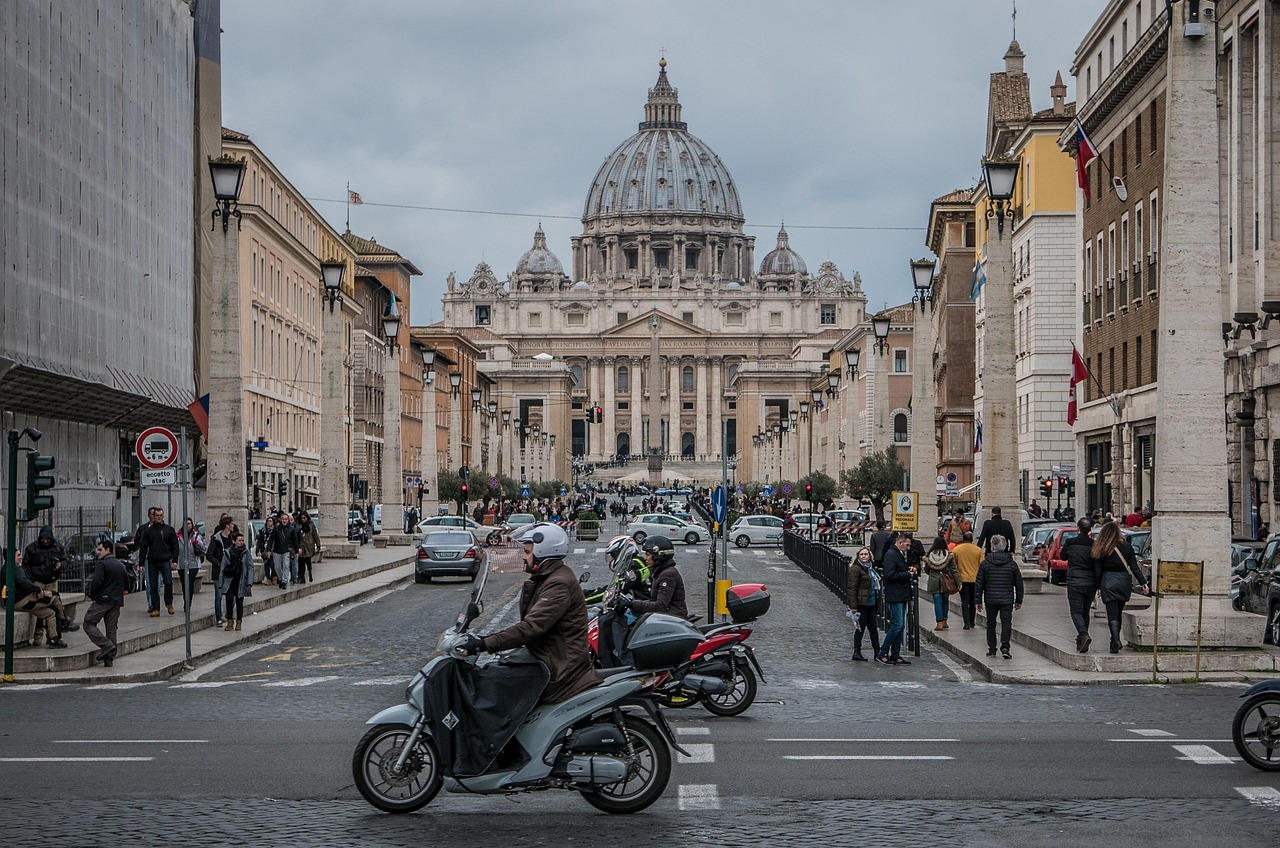
The Vatican Museums hold the Sistine Chapel and miles of galleries, and they get extremely busy, so an early online slot is worth the couple of euros extra. St Peter’s Basilica next door is free to enter, though the security queue is long and the dress code, covered shoulders and knees, is enforced. The dome climb is the best view over the city for about ten euros.
Squares, fountains and neighbourhoods
Rome has more genuinely free sights than most European capitals. The Trevi Fountain is still free to see from the square, though from February 2026 a two euro ticket is needed for the close-up area by the basin. Piazza Navona and the Spanish Steps cost nothing and are made for people-watching. Cross the river to Trastevere for the prettiest evening streets, and head to Monti near the Colosseum for boutiques and wine bars without the worst of the crowds.
How many days do you need in Rome?
Two full days cover the essentials, the ancient core on one day and the Vatican plus the squares on the other. Three or four days let you slow down, add the Borghese Gallery or a food-focused afternoon, and stop rushing between sights.
When is the best time to visit Rome?
Spring and autumn are the best months, warm enough to enjoy the squares without the summer heat or the peak crowds. Here is how the year breaks down.
| Season | What it is like | Notes |
| April to June | Warm, long evenings, gardens in bloom | Book sights ahead, this is a busy stretch |
| July and August | Hot and crowded, many locals leave | Midday is tough, some restaurants close in August |
| September to October | Warm days, thinner crowds | The quieter half of the shoulder season, ideal for walking |
| November to March | Cooler and quieter, some rain | Cheapest, shorter queues, bring a warm layer |
Where should you stay in Rome?
Stay central and you can walk to most of the sights, which saves both money and time. The right area depends on the trip you want.
| Area | Best for | What to know |
| Centro Storico | First visits, walking to everything | Priciest, but you are among the sights |
| Monti | Style and food near the Colosseum | Trendy, lively evenings, still central |
| Trastevere | Atmosphere and nightlife | Beautiful and busy, can be noisy late |
| Prati | The Vatican, calmer stays | Smart, residential, good restaurants |
| Near Termini | Budget and transport links | Cheaper, handy for arrivals, less charming |
How do you get around Rome?
Rome is a walking city at heart, and most visitors barely use public transport once they are central. When you do need it, the system is cheap and simple. A single BIT ticket costs 1.50 euros and is valid for 100 minutes, covering unlimited buses and trams plus one metro ride. Tapping a contactless card on the buses and metro caps your day at 8.50 euros through the Tap and Go system, the same as a 24 hour pass, so you never overpay. Taxis are metered, use the official white ones, and the metro has just three lines, useful mainly for the Vatican and Termini. For live transport and event updates, Rome’s tourist board is the official source.
What does Rome cost, and where should you eat?
Rome can be as cheap or as pricey as you make it. A coffee at the bar is around 1.20 euros, a slice of pizza a few euros, and a casual trattoria dinner with wine perhaps 25 to 35 euros a head. The main sights are the big spend, so budgeting for the Colosseum and Vatican and then eating simply keeps costs sensible. For where Romans actually eat, head a few streets back from the sights to the trattorias of Testaccio and Trastevere. For a special dinner, Rome holds more than 20 Michelin-starred restaurants, several of them cheaper than you would expect for the city.
Is Rome safe?
Rome is a safe city for visitors, with the usual big-city caveat about pickpockets. They work the crowded spots, the 64 bus to the Vatican, the metro, the queues at the Colosseum and around Termini, so keep bags zipped and in front of you and be wary of anyone crowding you on public transport. Violent crime against tourists is rare. Common sense and a secure bag are enough.
What to skip
A few things save time and money. Skip the restaurants with photo menus and touts right beside the Colosseum and Piazza Navona, walk two or three streets back for better food at half the price. Do not pay a reseller an inflated price for a Colosseum ticket when the official timed ticket is 18 euros, and do not turn up at the Vatican without a booking in high season unless you enjoy queueing. And do not feel you must pay the new two euro Trevi fee, the view from the top of the square is still free and often less of a scrum.
Plan the ticketed sights, leave the rest of each day loose, and Rome is far easier than its reputation suggests.
FAQs
Two full days cover the main sights, the ancient core and the Vatican. Three or four let you add the Borghese Gallery, Trastevere evenings and a slower pace.
The basic ticket is 18 euros and includes the Roman Forum and Palatine Hill on the same day. Under 18s are free. Book a timed slot in advance, as it sells out in peak season.
A 2 euro fee applies from February 2026 to enter the close-up area by the basin, payable by card or online. You can still see the fountain for free from the top of the square.
No. Since 2023 the Pantheon charges 5 euros for adults, with under 18s free. It is still one of the best-value sights in the city.
April to June and September to October give the best mix of warm weather and manageable crowds. Summer is hot and busy, and winter is cheapest and quietest.
It can be, but it does not have to be. Coffee at the bar is about 1.20 euros and a bus ticket 1.50 euros. The sights are the main cost, so book those and eat at simple trattorias to keep the budget down.