







Most people fly into Antalya for a beach hotel and never see the walled old town or the Roman ruins an hour up the road. That is a waste of a good trip. This Antalya travel guide is how we do it, the old town, the sights, the beaches, where to eat and when to come. We at VayCay Couple have used Antalya as a base more than once, so kept it plain and practical. Prices are a mix of euros and Turkish lira, current in September 2026.
Why go to Antalya?
Antalya Turkey is the main city on the country’s Mediterranean coast, and it does three holidays at once. There is the old walled town for wandering, a long run of beaches either side of the centre, and, within an hour, some of the best-preserved Roman cities anywhere. Add the Taurus mountains behind for waterfalls and cable cars and you can mix a beach week with real sightseeing. It suits couples after both culture and coast, and families who want a resort with real sightseeing on the doorstep. It is a short, cheap flight from the UK, which is why it is one of the busiest corners of Turkey.
Kaleici, the old town
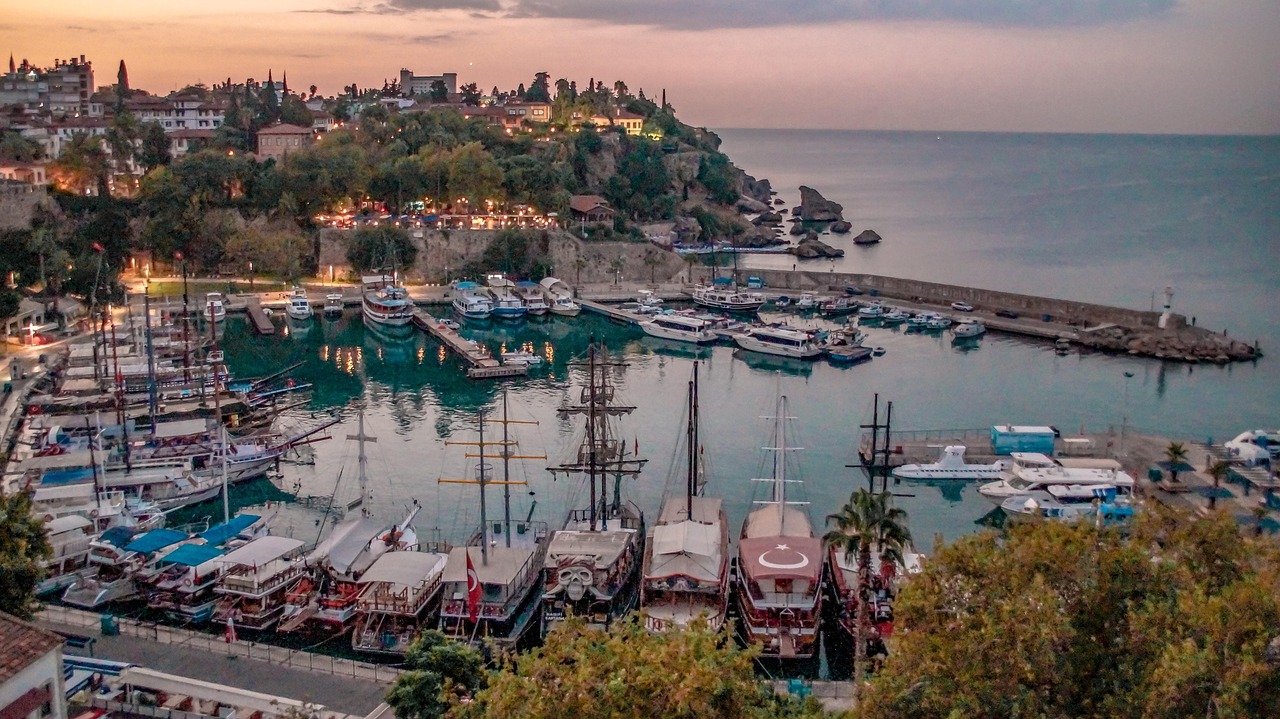
Kaleici is the old core, a knot of Ottoman houses, Roman walls and a small marina below the cliffs. Start at Hadrian’s Gate, the marble arch built in 130 CE and still the main way in, then get lost in the lanes of antique shops and courtyard cafes. Walk down to the old harbour, once the working port and now full of gulet boats for coast trips, and out to the Hidirlik Tower on the cliff for the sunset over the sea. Look up for the Yivli Minaret, the fluted 13th-century tower that is the city’s symbol, and the Kesik Minare, a broken minaret marking a building that was a Roman temple, then a church, then a mosque. The whole of the Antalya old town is walkable in a morning, but it is the part we would keep longest, ideally with a night or two staying inside the walls.
What should you see and do in Antalya?
Beyond Kaleici, the things to do in Antalya split between the city and the Roman ruins outside it. In town, the Antalya Museum is the country’s best for Roman statues and Lycian sarcophagi, the two Duden waterfalls are a short bus ride out, with the lower falls dropping straight into the sea, and the Tunektepe cable car lifts you to a 605m viewpoint over the bay. The bigger draws are the ancient cities. Perge has a colonnaded street and a stadium, Aspendos has the best-preserved Roman theatre in the world and still stages summer concerts, and Termessos sits high in the mountains for those who like a climb. If you plan to see several, the Museum Pass covers the state sites and museums for a week and saves money. Book Aspendos concert tickets ahead in summer. For a rainy day or younger children, the Antalya Aquarium near Konyaalti has one of the world’s longest underwater tunnels.
| Sight | What it is | Rough cost |
| Hadrian’s Gate | Roman marble arch, Kaleici | Free |
| Antalya Museum | Roman and Lycian finds | ~8-10 euros |
| Duden Waterfalls | Falls into the sea, bus ride out | ~75 TL |
| Perge | Roman city, colonnaded street | ~11 euros |
| Aspendos | Best Roman theatre in the world | ~15 euros |
| Tunektepe cable car | 605m viewpoint over the bay | Mid-range |
Antalya’s beaches
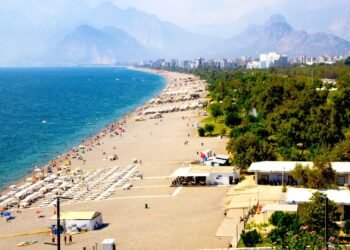
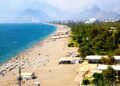
The city has two main beaches. Konyaalti, west of the centre, is a long shingle beach with a tidy promenade, showers and cafes, and a mountain backdrop. Lara, to the east, is soft sand and where most of the big resorts sit. Both are easy on public transport. For better water, day-trip along the coast. Antalya beaches worth the drive include the turquoise cove at Kaputas, reached down 190 steps, the quiet pines and Chimaera flames at Cirali, and the ruins-plus-swim combo at Phaselis. The beaches near Didim further west are another option if you are touring the coast.
| Beach | Type | Best for |
| Konyaalti | Shingle, city beach | Promenade, sunsets, easy access |
| Lara | Soft sand | Resorts, families, watersports |
| Kaputas | Turquoise cove | Day-trip swim and photos |
| Cirali | Sand, turtle nesting | Quiet nights, Chimaera flames |
| Phaselis | Fine sand by ruins | Snorkel around the old harbour |
Day trips worth taking
Antalya is a good base for the wider coast. Side, an hour east, pairs a Roman old town with the Temple of Apollo standing right on the sea. Koprulu Canyon, about 90 minutes north, is the place for white-water rafting in summer, cheap and fine for beginners. Down the coast at Olympos you walk among ruins in the pines and, after dark, hike up to the Chimaera, natural flames that burn out of the mountain rock. History fans can push west to Demre, about two hours away, for the church of Saint Nicholas, the real Santa Claus, and the Lycian rock tombs at Myra. In winter the Saklikent ski resort is close enough to ski in the morning and be back on the coast by afternoon.
What does a day in Antalya cost?
Not by UK standards, though the euro-priced ruins have crept up. Dinner for two with drinks lands around 1,000 to 1,800 lira, a beer is 80 to 150, and a kebab lunch far less. The big all-inclusive resorts in Lara and Belek can be strong value booked as a package. Site tickets are the one thing that adds up, which is why the Museum Pass pays off if you see more than two. Keep some cash for dolmus rides and small cafes.
Where do you eat well in Antalya?
Antalya eats well and cheaply, from grill houses to fish restaurants. These are the ones we go back to. A meal at the smart end runs about 500 to 900 lira a head, the grill stops far less. For the wider dishes to look for, our rundown of Turkish food covers the classics.
| Place | Address | Order this | Price |
| 7 Mehmet | Ataturk Kultur Parki, Meltem | Slow-cooked lamb tandir | Upper-mid, since 1937 |
| Pasa Bey Kebap | 1319 Sk. No:4, Muratpasa | Lahmacun, charcoal kebabs | Budget |
| Lara Balik Evi | Tevfik Isik Cad. No:8, Lara | Fresh fish picked off ice | Mid, sea view |
| Vanilla | Hesapci Sk. No:33, Kaleici | Modern European plates | Upper-mid |
| Sissci Ramazan | Faralya Cd. No:14 | Sis skewers and ayran | Cheap, no frills |
Which area should you stay in?
Pick the area to match the trip. Kaleici, inside the walls, is best for couples and sightseeing, full of small boutique hotels in old houses. Lara is the resort strip east of the city, big all-inclusives on the sand and best for families. Konyaalti, to the west, is cheaper and has seafront flats and live-music bars near the beach. Belek, 30 minutes east, is the golf-and-spa zone for luxury all-inclusives. Expect roughly 60 to 120 euros a night for a good hotel in Kaleici, and less on the resort strips out of season. We stay in Kaleici for a city break and Lara or Belek for a lazier beach week.
Getting there and around
Antalya airport (AYT) is about 13km east of the centre, a short, cheap flight from the UK, mostly seasonal. The T1A tram runs from near the airport into Kaleici in around 45 minutes for a few lira on an Antalyakart, and the same card works on the city trams and buses. Yellow taxis are metered, dolmus minibuses run set routes for coins, and app taxis like BiTaksi take cards. For the ruins and the coast beaches a hire car or a day tour is easier. The official Go Turkiye site has current transport and event details.
What is the best season for Antalya?
The best time to visit Antalya is the shoulder seasons, April into June and September into October, with warm days, a sea you can swim in, and ruins that are not baking. Summer, from July into August, is hot at 35 degrees and busy, fine for the beach but hard work for sightseeing. Winter is mild at around 15 degrees, cheap and quiet, and you can even ski at Saklikent in the mountains and be back on the coast the same day, though the sea is cold.
A two-day plan
With 48 hours, spend the first morning in Kaleici and the Antalya Museum, the afternoon on Konyaalti beach and the promenade, and the evening at Hadrian’s Gate and a fish dinner in Lara. On day two, head out early to Perge and Aspendos for the ruins, stop for a kebab on the way back, ride the Tunektepe cable car for the view, and finish with dinner in the old town. That covers the city, a beach and the Roman sites without rushing.
Stay inside the old walls, give a day to the ruins, and do not treat Antalya as only a beach. The classic Turkish food dishes are all easy to find across the city too. Iyi yolculuklar.
FAQs
Yes, more than its package-holiday reputation suggests. The old town, the museum and the Roman cities give it real depth beyond the resorts, and the mix of beach and history in one cheap trip is hard to match. Skip it only if you want nothing but a pool.
Three to four days covers the old town, a beach and the main ruins. A week suits a beach-based trip with day tours to Perge, Aspendos and the coast coves. Two days is enough for the city itself if you are tight on time.
Very. The Lara and Belek resorts are built for it, with pools, water parks and kids’ clubs, and the sandy beaches suit small children. In the city, the aquarium and the cable car keep older kids happy.
If you only do one, make it Aspendos for the theatre, or Perge if you prefer a full ruined city to walk. Both sit close together east of the city, so most day tours pair them.
Cards work almost everywhere, but keep 200 to 300 lira in small notes for dolmus rides, market snacks and the odd stall or taxi that prefers cash. Tipping a little at restaurants is normal.
The sea sits around 18 degrees in winter, cold but not impossible with a rash vest, and some locals swim year-round. Most visitors save swimming for May to October when the water is warm.