









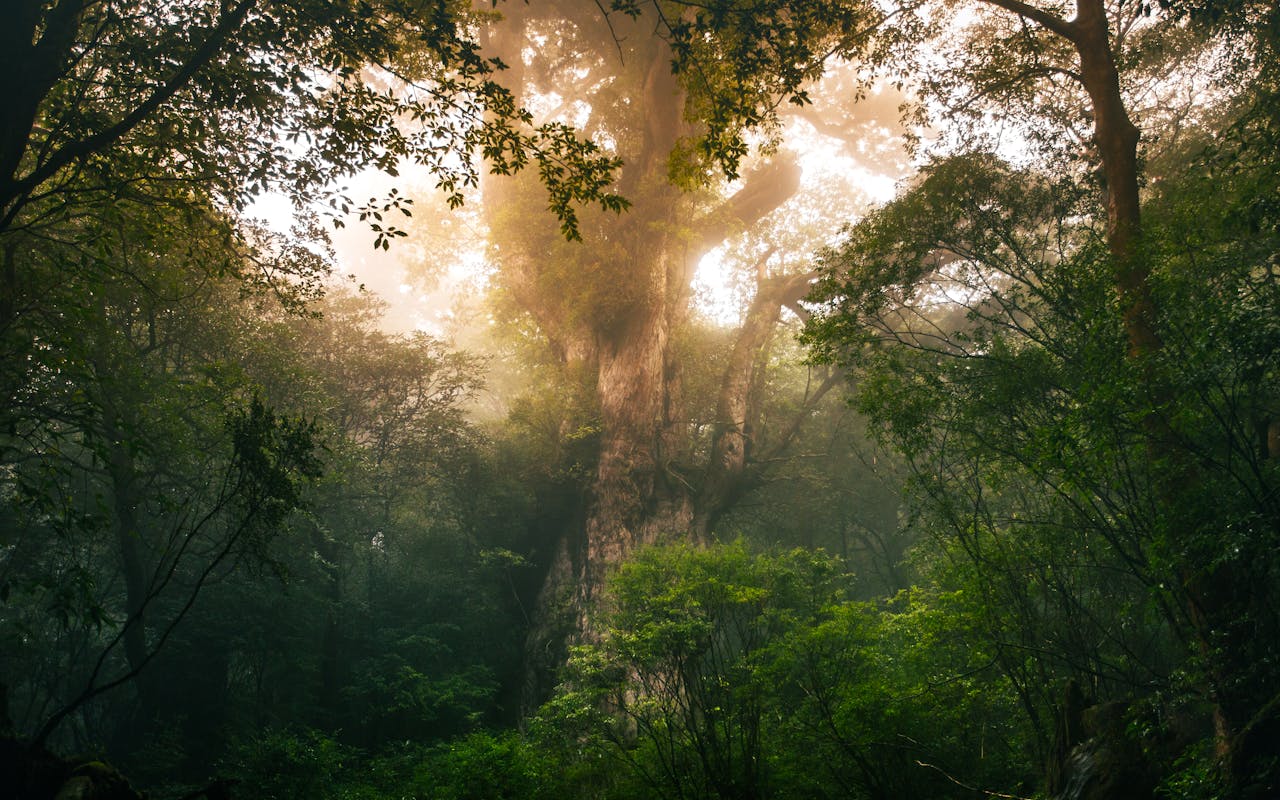
Off the south coast of Japan sits Yakushima, a small, mountainous island covered in some of the oldest trees on earth and soaked by more rain than almost anywhere else in the country. It became Japan’s first UNESCO World Heritage natural site in 1993, and its moss-draped forest helped inspire Studio Ghibli’s Princess Mononoke. VayCay Couple rate Yakushima Island as one of the most memorable stops in Asia for anyone who takes forests over cities. This guide answers how to get to Yakushima, what the Jomon Sugi hike involves, when to go and what it all costs. Prices are in yen and were checked in August 2026.
Where is Yakushima and why go?
Yakushima lies about 60 kilometres south of Kagoshima, at the northern edge of the subtropics, so it is warm at the coast and cool and wet in the mountains that rise above 1,900 metres. The draw is the yakusugi, the island’s ancient Japanese cedars, the oldest of which are well over a thousand years old. Add wild Yaku macaques and Yaku deer, waterfalls, tidal hot springs and nesting sea turtles, and it works as a three to five day nature trip rather than a quick stop.
How do you get to Yakushima?
There are three ways across, all from Kagoshima on the mainland. The fastest is the JAC flight from Kagoshima Airport, about 35 minutes. The most popular is the Toppy and Rocket jetfoil from Kagoshima port, roughly 2 to 3 hours to Miyanoura or Anbo, at around 10,000 yen each way. The cheapest is the slower car ferry, about 4 hours and closer to 6,000 yen, which matters if you want to bring a vehicle. Book ahead in spring and autumn, since seats and sailings fill up and rough weather can cancel boats.
How do you get around the island once you arrive?
Renting a car is the sensible choice. Yakushima has a coastal ring road but only a sparse local bus service, and the trailheads and onsen are awkward to reach without wheels. Miyanoura is the main port and has the widest choice of rental desks, shops and accommodation, while Anbo sits closer to the main hiking trailheads. Fill up on fuel before heading inland, as petrol stations are scarce on the west side.
What is the Jomon Sugi hike like?
The Jomon Sugi is the island’s most famous tree, a giant cedar thought to be between 2,000 and 7,000 years old. Reaching it is a serious day out, about 22 kilometres round trip and 8 to 10 hours on foot, most of it along an old logging railway line before a steep final climb to a viewing deck. Between March and late November, private cars cannot drive to the Arakawa trailhead, so you take an early reserved shuttle bus from near Yakusugi Land, leaving before dawn. Go only in decent weather, carry rain gear whatever the forecast, and start early enough to be back before dark.
Beyond the Jomon Sugi, what is there to do?
Plenty, and Yakushima hiking is not all epic, since much of it is gentler than the Jomon Sugi trek. Shiratani Unsuikyo is the moss-covered ravine that inspired Princess Mononoke, with looped trails of one to four hours and a small entry fee of about 500 yen. Yakusugi Land, also around 500 yen, has boardwalk loops of thirty minutes to a couple of hours among old cedars, good if you want the forest without the marathon. On the coast, Ohko-no-taki plunges 88 metres, and Hirauchi Kaichu Onsen is a tidal hot spring you can only enter around low tide for about 200 yen. Between May and August, loggerhead and green turtles nest on Nagata Inakahama beach, the largest nesting site in Japan, visited on guided evening tours in season.
What is the weather like on Yakushima, and when to go?
The best time to visit Yakushima is late spring, because it rains hard year-round and Yakushima weather is one of the wettest in Japan, so no season is truly dry. May in particular brings mild trails and rhododendron flowers. October and November are cooler, clearer and quieter. June is the rainy season at its heaviest, August and September carry typhoon risk, and winter brings snow to the peaks that can close the high trails. Whenever you come, plan for rain and keep a spare dry day for the big hike.
Where should you stay on Yakushima?
Base yourself in Miyanoura for the best transport links and the widest choice, or in Anbo to be nearer the trailheads. Accommodation runs from traditional ryokan inns with seafood dinners and hot baths to simple guesthouses and a few campsites for the well-prepared. Book early for spring and autumn, and pick a place with parking if you are renting a car.
Yakushima at a glance
| Sight or task | What it is | Time or cost |
| Jomon Sugi hike | Ancient cedar, old railway trail | 22 km, 8-10 hours |
| Shiratani Unsuikyo | Moss ravine, Mononoke forest | 1-4 hours, ~500 yen |
| Yakusugi Land | Boardwalk cedar loops | 30 min-2 hours, ~500 yen |
| Hirauchi Kaichu Onsen | Tidal seaside hot spring | Low tide only, ~200 yen |
| Nagata Inakahama | Sea turtle nesting beach | May-Aug, guided tours |
| Jetfoil from Kagoshima | Fastest sea crossing | 2-3 hours, ~10,000 yen |
What should you pack and expect for Yakushima?
Bring proper rain gear and sturdy, broken-in hiking shoes, since the trails are muddy and slippery for most of the year, and pack a warm layer even in summer for the peaks. Carry cash, as many small places and buses do not take cards, and keep electronics in waterproof bags. Stick to marked trails to protect the fragile moss and roots, and a small conservation donation is expected at the main trailheads. Follow the usual Japanese etiquette too, removing shoes where asked and keeping noise down around the shrines and forest.
Give Yakushima a spare day for the weather, rent a car, and pair one big cedar hike with a slow moss-forest walk. If remote islands are your thing, we have written about another island most people miss closer to home in Europe.
FAQs
Three to five days works well. That gives you one big hike such as the Jomon Sugi, a gentler forest walk at Shiratani Unsuikyo or Yakusugi Land, and time for the coast, an onsen and a weather buffer day, since rain can wash out a planned hike.
Yes, if you like forests, hiking and wildlife over nightlife and cities. The thousand-year-old cedars, the Mononoke moss forest and the nesting turtles are genuinely special, though the constant rain and the effort of the trails mean it suits active travellers most.
Shiratani Unsuikyo, the island’s moss-covered ravine, is widely cited as a key inspiration for the film’s forest, and Studio Ghibli staff visited to sketch it. It is not a literal setting, but walking it feels close to the film.
There is no hard permit, but between March and late November you must use the reserved shuttle bus to the Arakawa trailhead rather than driving, and a conservation donation of one to two thousand yen is requested. Check the shuttle timetable and book ahead in peak season.