






Europe’s famous coast fills your feed every July, and the good sand is shoulder to shoulder by ten in the morning. The hidden beaches in Europe are still out there, but they make you work for them, an hour on foot, a boat with no road behind it, a goat path down a cliff. We have swum at all seven below, and the deal is the same each time, some sweat and no facilities in exchange for a near-empty cove. Here are our favourite secret beaches in Europe, roughly north to south, with the walk, the boat or the track that gets you in and the month we would pick. None need a guide or a permit, just a bit of planning and decent shoes.
Sandwood Bay, Sutherland, Scotland
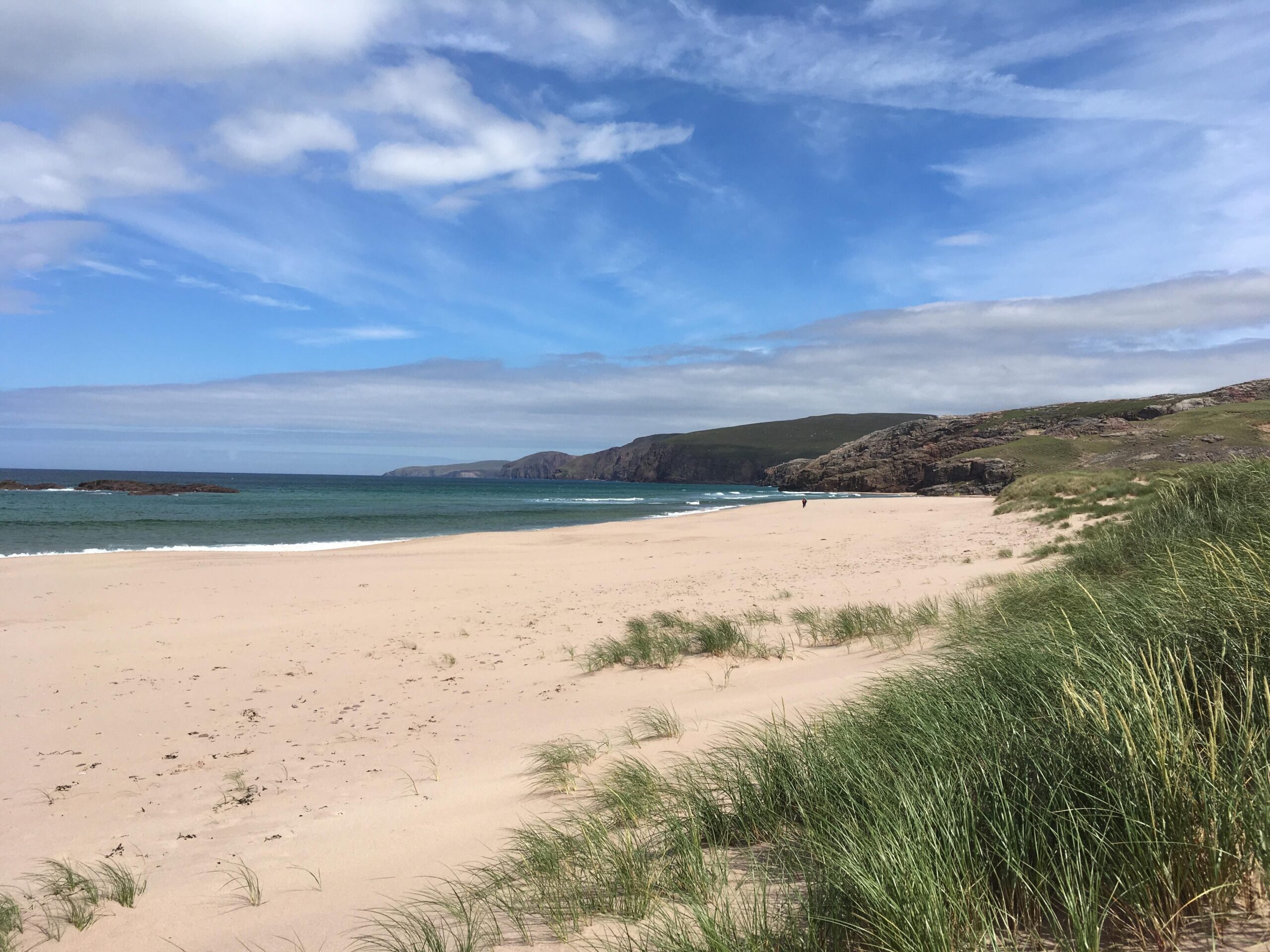
Sandwood Bay is the one that ruins other beaches for you. A mile of pink-tinged sand, big dunes and the Am Buachaille sea stack offshore, and the only way in is a four-mile walk across peat moor from the Blairmore car park, about 90 minutes each way. There is no road, no cafe and no bin, and the land is looked after by the John Muir Trust, so you carry everything out. Wild camping is fine if you leave no trace. Go in May or June for long light and fewer midges. It is the wildest of these beaches in Europe and worth the drive up from Ullapool.
Plage de Saleccia, Corsica, France
Plage de Saleccia sits in the Agriates, an empty stretch of scrub on the north coast of Corsica in France, with a kilometre of white sand and clear shallow water. No paved road reaches it. You either bump along 12km of rough track in a hired 4×4 or take the shuttle boat from Saint-Florent and walk the last stretch through the maquis. There is one seasonal snack hut, so bring your own shade and at least two litres of water a head. It is busiest at midday when the yachts anchor, so come early or stay for the evening light. The sand runs so pale it reads almost Caribbean against the water.
Gjipe Beach, Albanian Riviera
Gjipe beach hides where a gorge meets the sea on the Albanian Riviera, between Dhermi and Himare, with pebbles, cliffs and a couple of eco-camps. Park near the St Theodor Monastery ruins and walk about 3km down the track, roughly an hour and a half, or paddle round by kayak from Jale. A shack grills the day’s catch and the camps rent tents on the sand for a low nightly rate. September is the sweet spot, with sea around 26 degrees and the summer crowd gone. Walk 15 minutes up into the gorge for shade and dripping rock, and after dark the water sometimes lights up with plankton.
Platja des Coll Baix, Mallorca, Spain
Skip Magaluf. On the Alcudia peninsula in the north of Mallorca, Coll Baix is a curve of grey shingle under 200-metre cliffs, reached by a steep 45-minute path that ends in a hands-on scramble. That descent keeps the numbers down, so even in August you might share it with a dozen people. Wear proper shoes, take water, and go in the morning, as the cliffs throw the cove into shade by late afternoon. Pack a mask, since bream shoal along the rocks at each end.
Kokkinokastro, Alonnisos, Greece
Kokkinokastro means red castle, and one look at the rust-red cliff dropping into blue water explains it. It sits on Alonnisos in the Sporades, one of the quieter corners of Greece, backed by pine with golden-pebble sand and no big ferries stopping nearby. It is a 15-minute scooter ride east of Patitiri harbour plus a short dirt track. Come in late afternoon when the cliff glows, and snorkel out to the islet about 70 metres offshore, said to sit on a Bronze Age settlement.
Praia da Ursa, Sintra, Portugal
Praia da Ursa lies just north of Cabo da Roca, the westernmost point of mainland Europe, on the Portugal side of the Sintra coast. Tall rock stacks stand offshore and the sand has a dark, tannin tint that looks prehistoric. A 20-minute cliff path drops to a steep final scramble on loose gravel, so trainers beat flip-flops. There are no services at all. The official Visit Portugal board flags the Atlantic swell here, which is strong, so check the sea and stay out of the water on big days. At low tide you can poke into caves at the south end.
Spiaggia di Mezzavalle, Conero, Italy
Mezzavalle beach sits under Monte Conero just south of Ancona in Italy, a long strip of pale shingle and green Adriatic water. Two footpaths lead down, or you can paddle a SUP round from Portonovo. The main path is a 20-minute descent and a solid 30-minute climb back, so save some legs. A single rough trattoria near the sand does spaghetti alle vongole from the bay. Bring cash, as the card machine is a rumour, and extra sunscreen, since shade is scarce.
The seven at a glance
A quick way to pick one by effort and season. Access times are one-way from the nearest parking or harbour.
| Beach | Country | Getting there | Best month |
| Sandwood Bay | Scotland | 4-mile moor walk, 90 min | May to June |
| Plage de Saleccia | France (Corsica) | Boat from Saint-Florent or 4×4 | September |
| Gjipe | Albania | 3km gorge track, 90 min, or kayak | May and September |
| Coll Baix | Spain (Mallorca) | Steep 45-min path plus scramble | October |
| Kokkinokastro | Greece (Alonnisos) | Scooter from Patitiri plus track | July |
| Praia da Ursa | Portugal | 20-min cliff path plus scramble | April or October |
| Mezzavalle | Italy (Conero) | 20-min descent or SUP | June |
Start early, check the tide and swell, and carry your rubbish out. These are some of the last quiet stretches of sand in Europe, so keep the geotag vague and let them stay that way. See you at the tideline.
FAQs
Short on time, we would point you to Sandwood Bay for the sheer scale, or Gjipe for warm September water and somewhere to camp. Coll Baix and Praia da Ursa give the biggest payoff for the shortest walk. All seven stay quiet because the hard access filters out the casual crowd.
Mostly, yes, though the walks range from 20 minutes at Ursa and Mezzavalle to 90 minutes at Sandwood and Gjipe. Saleccia and Gjipe also take a boat or kayak, and Kokkinokastro is a short scooter ride plus a dirt track. None need climbing skill, just grippy shoes and water.
June to September across the Mediterranean ones, with Gjipe and the Greek and Italian coves warmest in late summer. Sandwood in Scotland stays cold all year, so it is a paddle and a view more than a long swim.
Wild camping is accepted at Sandwood Bay and tolerated behind the dunes at Saleccia, both leave-no-trace. Gjipe has small eco-camps that rent tents on the sand. The rest have no facilities and no camping, so treat them as day trips.