









Romania is not a country to rush through in three days. The distances are bigger than they look, the trains can be slow, and the best trips usually focus on one or two regions rather than trying to see everything at once.
Bucharest gives you the capital, museums, food and transport links. Transylvania gives you castles, old towns and mountains. Bucovina has painted monasteries. The Danube Delta is for boats and birdlife. The Black Sea coast is better in summer. The Carpathians are for walking, road trips and winter sports.
This Romania travel guide helps you choose the right route, not just collect a long list of places.
Is Romania worth visiting?
Yes, Romania is worth visiting if you want a mix of old towns, mountains, castles, rural villages, wildlife, spa towns, road trips and good-value travel.
It suits:
- first trips to Eastern Europe
- castle and old town routes
- mountain holidays
- road trips
- train-based city travel
- food and culture trips
- summer coast breaks
- nature trips in the Danube Delta
- travellers who want more than one type of holiday in one country
Romania is less suited to travellers who want fast transport between every stop, polished resort towns everywhere, or a trip that works with no planning at all. It is easy to enjoy, but it works better when the route is realistic.
Where is Romania?
Romania is in south-eastern Europe, bordered by Hungary, Serbia, Bulgaria, Ukraine and Moldova. It also has a Black Sea coastline.
For many travellers, Romania sits within a wider Europe route, but it needs more time than a quick add-on. Bucharest, Brașov, Sibiu, Cluj-Napoca, Iași and Timișoara all work as city bases, while the Carpathians, Bucovina, Maramureș and the Danube Delta need more careful planning.
Romania has enough different destinations to make a short trip feel very different from a longer one. A weekend in Bucharest is not the same as a Transylvania road trip or a Danube Delta nature stay.
How many days do you need in Romania?
Seven to ten days is best for a first Romania trip. That gives you enough time for Bucharest and Transylvania without spending the whole trip in transit.
| Time in Romania | What it suits |
|---|---|
| 2 to 3 days | Bucharest only |
| 4 to 5 days | Bucharest and Brașov |
| 7 days | Bucharest, Brașov, castles and one old town |
| 10 days | Bucharest, Transylvania and one slower region |
| 14+ days | Transylvania, Bucovina, Maramureș, Danube Delta or coast |
If it is your first visit, do not try to see Bucharest, Brașov, Sibiu, Cluj, Maramureș, Bucovina, the Danube Delta and the coast in one week. Romania is better with fewer bases.
Where should you go in Romania first?
For a first trip, start with Bucharest and Transylvania. That gives you the easiest mix of city, castles, mountains and old towns.
| Place | Best for | Good to know |
| Bucharest | Capital, museums, food, transport | Best arrival point for many visitors |
| Brașov | Castles, mountain views, old town | Strong first Transylvania base |
| Sibiu | Architecture, culture, slower city stay | Good with Transylvania routes |
| Sighișoara | Medieval streets and towers | Small but memorable |
| Cluj-Napoca | Food, student energy, western Transylvania | Good for longer routes |
| Bucovina | Painted monasteries | Needs more travel time |
| Maramureș | Wooden churches, villages | Best with a car or driver |
| Danube Delta | Birds, boats, slow nature travel | Needs specialist planning |
| Black Sea coast | Summer beaches | Seasonal and different from inland Romania |
If you only have one week, Bucharest, Brașov and Sibiu or Sighișoara is a stronger plan than trying to cross the whole country.
Bucharest or Transylvania?
Choose Bucharest if you want museums, nightlife, restaurants, architecture, public transport and easy airport access.
Choose Transylvania if you want castles, mountains, old towns, Saxon villages and a slower route.
| Choose Bucharest if you want | Choose Transylvania if you want |
| City break | Castles and old towns |
| Museums | Mountain views |
| Food and nightlife | Brașov, Sibiu and Sighișoara |
| Easy airport access | Fortified churches |
| Short stay | Road trip or train route |
For most first-time visitors, the best answer is both: start in Bucharest, then move to Brașov.
What is Bucharest like?
Bucharest is busy, large and not always pretty at first glance. It is still worth visiting because it helps explain modern Romania.
You will find wide boulevards, old churches, communist-era buildings, parks, cafés, museums and busy neighbourhoods. The city has rough edges, but it also has some of the best food, nightlife and hotel choice in the country.
Good Bucharest stops include:
- Palace of the Parliament
- Romanian Athenaeum
- Old Town
- Village Museum
- Cărturești Carusel bookshop
- Cișmigiu Gardens
- Herăstrău Park
- National Museum of Art
- Stavropoleos Monastery
- Cotroceni area
If you like museums, Bucharest is the easiest place in Romania to build a culture-focused day.
Is the Palace of the Parliament worth visiting?
Yes, the Palace of the Parliament is worth visiting if you are interested in Romania’s communist period, architecture or political history.
It is one of the most famous buildings in the country and one of the largest administrative buildings in the world. The scale is the main point. It can feel heavy and strange rather than beautiful, but that is why it matters.
Book an official tour if you want to go inside. Do not just look at it from outside and move on if modern history is part of your trip.
What is Transylvania best for?
Transylvania is best for castles, old towns, Saxon villages, mountain scenery and road trips.
The main places to consider are:
- Brașov
- Sibiu
- Sighișoara
- Cluj-Napoca
- Bran Castle
- Peleș Castle
- Viscri
- Râșnov
- Biertan
- Piatra Craiului
- Apuseni Mountains
Transylvania is not only about Dracula. That story is part of the tourism image, but the region is more useful for fortified towns, old churches, mountain roads, village stays and food.
Is Bran Castle worth visiting?
Yes, Bran Castle can be worth visiting, but go with the right expectations.
It is often sold as Dracula’s Castle, but the link is more tourism than direct history. The castle itself is still interesting because of its shape, setting and role in the region.
Bran works best as part of a Brașov-based trip. Pair it with Râșnov, Piatra Craiului or a slower village stop rather than making it the only reason to travel to Romania.
Is Peleș Castle worth visiting?
Yes. Peleș Castle is one of Romania’s best castle visits and is often more impressive inside than Bran Castle.
It sits in Sinaia, between Bucharest and Brașov, which makes it useful on a route between the capital and Transylvania. If you only have time for one castle and want interiors, Peleș is a strong choice.
Book ahead when possible and check opening days before travelling.
Is Romania good for hiking?
Yes, Romania is very good for hikes, especially in the Carpathian Mountains. The Făgăraș, Bucegi, Piatra Craiului, Retezat and Apuseni areas all offer strong walking routes.
Good hiking areas include:
| Area | Best for |
| Bucegi Mountains | Easier access from Bucharest and Brașov |
| Piatra Craiului | Ridge walks and limestone scenery |
| Făgăraș Mountains | Higher, harder mountain routes |
| Retezat National Park | Lakes and serious walking |
| Apuseni Mountains | Caves, villages and softer routes |
| Via Transilvanica | Long-distance cultural walking |
The Via Transilvanica is one of the most interesting walking routes in the country because it links villages, landscapes and local history. The new Terra Borza stretch connects Viscri and Brașov through a section of Transylvania that works well for a shorter multi-day walk.
What is Via Transilvanica?
Via Transilvanica is a long-distance cultural trail across Romania. It is not just a mountain route. It passes through villages, forests, old towns, farms and historic regions.
The Terra Borza section between Viscri and Brașov is useful if you want a shorter part of the route with clear start and end points. It links Saxon villages, rural tracks and Brașov, which makes it easier to plan than the full trail.
You can read our full Via Transilvanica Terra Borza guide before deciding how much walking to add to a Romania route.
Is Romania good for wildlife?
Yes. Romania has bears, wolves, lynx, birds, wetlands and large forest areas. You may see wildlife in mountain regions, forest edges and the Danube Delta, but sightings should be handled safely and respectfully.
Do not approach bears, feed animals or stop on roads for unsafe photos. Use licensed guides or proper hides for bear watching, and follow local rules in protected areas.
The Danube Delta is the best-known nature area for birdlife, boat trips and wetland scenery.
Is the Danube Delta worth visiting?
Yes, the Danube Delta is worth visiting if you like birds, boats, fishing villages and slow nature travel.
It is not a quick city day trip. You need to reach Tulcea or another gateway, then continue by boat. This is a different kind of Romania trip: slower, quieter and more dependent on weather and local transport.
The Danube Delta is a UNESCO World Heritage Site and one of the most important wetland areas in Europe. It is best in spring, summer and early autumn, depending on what you want to see. Use official or local specialist information before booking boat routes.
What UNESCO sites are in Romania?
Romania has several UNESCO places worth planning around, especially if you like old towns, churches, monasteries and nature.
Key UNESCO sites include:
- Danube Delta
- Painted Monasteries of Bucovina
- Villages with fortified churches in Transylvania
- Historic Centre of Sighișoara
- Wooden churches of Maramureș
- Dacian Fortresses of the Orăștie Mountains
- Roșia Montană Mining Landscape
For a first trip, Sighișoara and the fortified churches are easiest to connect with Transylvania. Bucovina and Maramureș need more time.
Is Romania good for beaches?
Romania has Black Sea beaches, but they are seasonal and feel different from the rest of the country.
The main coast areas include:
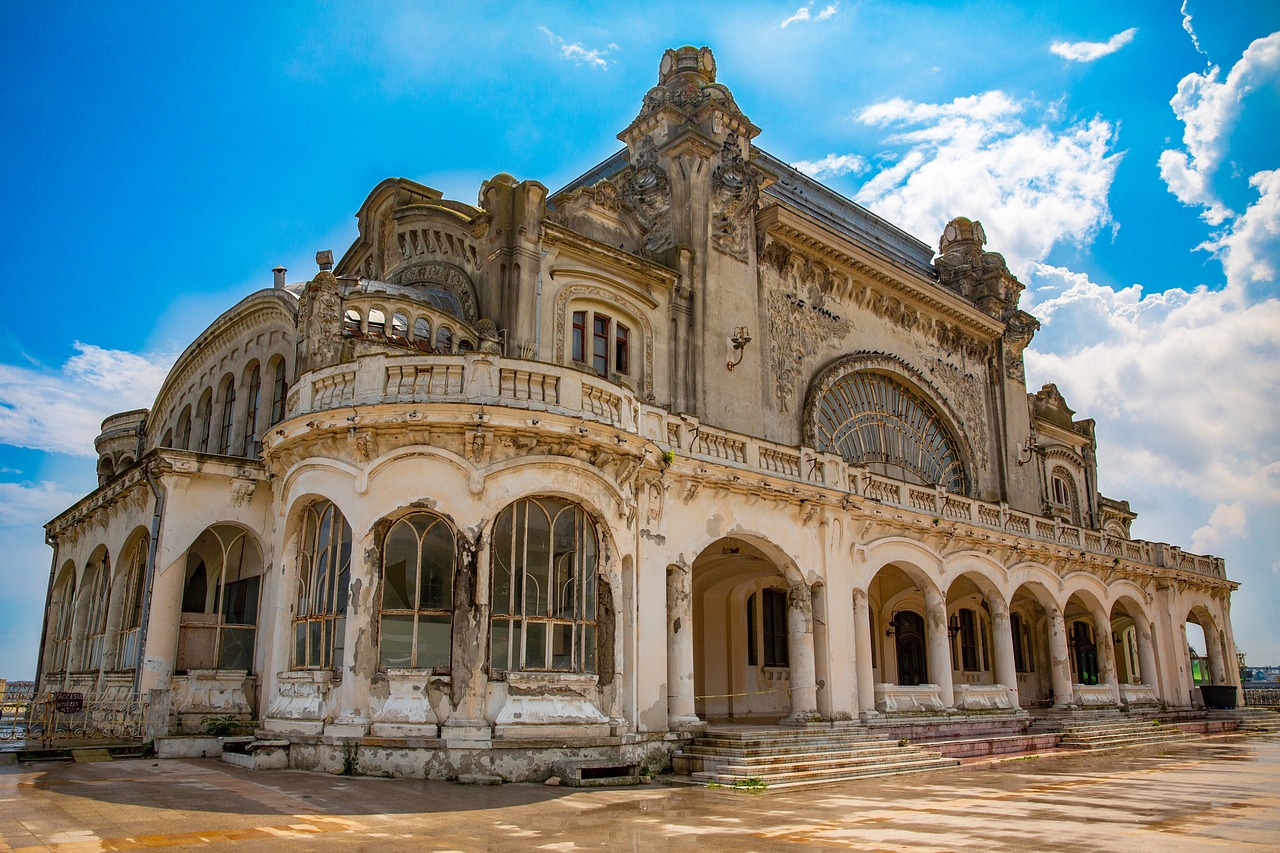
- Constanța
- Mamaia
- Eforie Nord
- Vama Veche
- Costinești
- Mangalia
The coast is best in summer. It does not fit every first Romania route because it pulls you away from Transylvania and the mountains. Add it if you specifically want Black Sea time, not just because it is on the map.
What should you eat in Romania?
Romanian food is filling and suited to cold weather, mountain towns and long travel days. Expect soups, grilled meats, cabbage, polenta, cheese, pickles and pastries.
Try:
- sarmale
- mămăligă
- mici
- ciorbă
- papanași
- zacuscă
- covrigi
- tochitură
- cozonac
- local cheeses
- Romanian wine
At VayCay Couple, we think Romania makes most sense when the food is part of the route: soup after a cold walk, papanași in a mountain town, or grilled mici after a long train ride.
If food matters to your trip, Romania is better in traditional restaurants, guesthouses and local markets than in rushed tourist menus.
How do you get around Romania?
Romania is possible by train, bus, car and domestic flights, but travel takes time.
Train
Train works well for key routes such as Bucharest to Brașov, Bucharest to Constanța, Bucharest to Sibiu, Bucharest to Cluj-Napoca and Brașov to Sighișoara or Cluj.
Use CFR Călători for official train times and tickets.
Bus
Buses and minibuses are useful where train routes are slower or missing. They can work well for smaller towns and regional travel.
Car
A car helps for villages, monasteries, mountain roads, castles and rural areas. It is less useful in Bucharest.
Domestic flights
Domestic flights can save time between distant cities, but they are not needed for a simple Bucharest and Transylvania route.
Do you need a car in Romania?
You do not need a car for Bucharest, Brașov, Sibiu, Sighișoara or Cluj-Napoca if you build the route around trains and buses.
A car helps if you want:
- Maramureș villages
- Bucovina monasteries
- rural Transylvania
- mountain roads
- Danube Delta gateway transfers
- several castles in one day
- flexible guesthouse stays
- smaller places away from rail stations
For a first visit, trains can cover the main cities. For a deeper Romania trip, a car gives more control.
Is driving in Romania difficult?
Driving in Romania is manageable, but it can be slower than expected.
Road quality varies. Mountain roads can be winding. Villages may have animals, carts, pedestrians and slow traffic. Some scenic roads, such as the Transfăgărășan, are seasonal and can close because of snow.
Do not plan long driving days based only on distance. Check routes, road conditions and daylight.
When is the best time to visit Romania?
The best time depends on the trip.
| Season | Best for | What to expect |
| Spring | Cities, castles, countryside | Mild weather, some rain |
| Summer | Mountains, coast, festivals | Hot cities, busy coast |
| Autumn | Transylvania, food, colours | Good weather, calmer routes |
| Winter | Skiing, Christmas markets, snow | Cold weather, mountain conditions |
May, June, September and early October are the best months for a balanced Romania trip. July and August are good for mountains and coast but can be hot in Bucharest.
Is Romania expensive?
Romania is usually good value compared with many western European countries, but prices vary by place and season.
| Budget style | Daily estimate | What it usually covers |
|—|—|
| Budget | €40 to €70 | Simple stays, public transport, casual food |
| Mid-range | €80 to €150 | Comfortable hotels, restaurants, trains, paid sights |
| Higher-end | €180+ | Better hotels, private drivers, guided tours, spa stays |
Bucharest and popular Transylvania towns cost more than rural areas. Summer coast stays and peak mountain weekends can be more expensive.
Is Romania safe?
Romania is generally safe for visitors using normal travel care.
Main things to watch:
- pickpockets in busy city areas
- taxi overcharging
- bear safety in mountain areas
- road conditions if driving
- dogs in rural areas
- weather changes in the mountains
- scams around very touristy places
Check official Romania travel advice before travelling, especially for entry rules, border updates and safety guidance.
What should you pack for Romania?
Pack based on region and season. Romania can mean city heat, mountain cold and wet weather in the same trip.
Useful items include:
- comfortable walking shoes
- light waterproof jacket
- warm layer for mountains
- sun hat in summer
- swimwear for coast or spa towns
- power bank
- European plug adapter
- cash for rural areas
- offline maps
- insect repellent for delta or summer countryside
- small first aid kit
- day bag for train and road travel
If you are hiking, bring proper gear rather than relying on city clothes.
How should you shape a first Romania route?
A simple first route is better than a long loop.
Good route shapes include:
| Route style | Good combination |
| First trip | Bucharest, Brașov and Sibiu or Sighișoara |
| Castles and towns | Bucharest, Sinaia, Brașov and Bran |
| Mountain trip | Brașov, Piatra Craiului and Bucegi |
| Culture route | Bucharest, Sibiu, Sighișoara and Biertan |
| Nature route | Bucharest, Brașov and Danube Delta or mountains |
| Longer route | Bucharest, Transylvania, Bucovina or Maramureș |
Do not add the Danube Delta, Black Sea coast and Maramureș to a short Transylvania trip unless you have enough days.
Common Romania travel mistakes
Avoid these if you want a smoother trip:
- trying to see the whole country in one week
- treating Bran Castle as the only reason to visit Transylvania
- skipping Bucharest completely
- underestimating train and road times
- planning mountain roads without checking if they are open
- adding the Danube Delta without enough time
- expecting rural transport to be frequent
- visiting the Black Sea coast outside summer and expecting resort energy
- not carrying cash in smaller places
- ignoring bear safety in mountain regions
Romania works best when each stop has a clear reason.
FAQs
Yes. Romania is worth visiting for Bucharest, Transylvania, castles, mountains, UNESCO sites, the Danube Delta, food, villages and good-value travel.
Seven to ten days is best for a first trip. That gives you time for Bucharest, Brașov and one or two Transylvania stops without rushing too much.
A strong first route is Bucharest, Sinaia, Brașov and Sibiu or Sighișoara. This gives you the capital, castles, mountains and old towns.
Yes, Romania is part of the Schengen Area. Entry rules can depend on your nationality, so check official travel advice before booking.
Yes, if you focus on Bucharest, Brașov, Sibiu, Sighișoara, Cluj-Napoca and Constanța. A car helps for villages, monasteries, rural areas and mountain roads.
Romania is usually good value compared with much of western Europe. Bucharest, the coast and popular Transylvania towns cost more than rural areas.
Romania is known for Transylvania, castles, the Carpathian Mountains, Bucharest, painted monasteries, the Danube Delta, Black Sea beaches and traditional food.
June and September are two of the best months for a mixed trip. They work well for cities, castles, countryside and mountain routes without the strongest summer heat.