






You can walk across Verona in about 25 minutes, arena to river, which is what makes it one of the easiest days out in northern Italy. The essentials are the 2,000-year-old Roman Arena, Juliet’s House and the market square of Piazza delle Erbe, and if you plan to see three or more paid sights the 27 euro VeronaCard pays for itself. What follows is what to see and do, with prices, named places to eat, what to skip and a one-day plan. The logistics, where to stay in Verona, how to get there and the best day trips, sit in the companion guide. Written and checked in July 2026.
What are the best things to do in Verona?
Almost everything sits inside a 20-minute walk of Piazza Bra, so you can see the core on foot in a day. Individual prices below are approximate 2026 figures, and most are free once you hold a VeronaCard.
| Sight | Highlight | Solo price (approx) | Time |
| Verona Arena | Roman amphitheatre, summer opera stage | 12 euro daytime | 45 min |
| Casa di Giulietta | The balcony and the wall of love notes | Courtyard free, museum 12 euro | 30 min |
| Torre dei Lamberti | 84m climb, the old Rengo and Marangona bells | About 9 euro | 30 min |
| Castelvecchio Museum | The Cangrande equestrian statue, Pisanello | About 9 euro | 1 hour |
| Castel San Pietro | The postcard terrace over the river | Free, funicular about 2 euro | 45 min |
| Basilica di San Zeno | Mantegna altarpiece, bronze door panels | About 4 euro | 30 min |
The Verona Arena and the summer opera
See the Arena first, a pink-marble amphitheatre from the first century, older than the Colosseum and still working. By day you walk in for about 12 euro, or free on the card, and 45 minutes is plenty. The event is the opera. The 2026 Arena Opera Festival, its 103rd edition, runs 50 nights from 12 June to 12 September, with Aida, Nabucco, Turandot and a new Moulin Rouge staging of La Traviata. The cheapest seats are the unnumbered stone steps, the gradinata, from around 30 euro, rising past 250 euro for central stalls, and under-30s can grab limited 30 euro stalls seats on many nights. Buy opera tickets only through the official Arena site or its named resellers, book months ahead for the big titles, and take a cushion for the stone. On performance days the daytime visit closes by mid-afternoon.
Juliet’s House, Piazza delle Erbe and the tower
Two minutes away on Via Cappello, Juliet’s House is the Romeo and Juliet stop. The real draw is the courtyard, free to enter, with the balcony above and a wall papered in love notes, and the Club di Giulietta really does answer letters addressed to Juliet. The balcony itself was only added in the 1930s for the tourists. Skip the paid museum inside, about 12 euro with a booked slot, unless you are a real Shakespeare fan, since it is small. Grab a scoop next door at Venchi on Via Cappello, then walk to Piazza delle Erbe, the old Roman forum turned market square, for a spritz. Climb, or lift, the 84-metre Torre dei Lamberti on the square for the best view in the centre, about 9 euro, and listen for its two medieval bells, the Rengo and the Marangona. Verona is one of the most romantic towns in Italy.
Castelvecchio, the river and the viewpoint
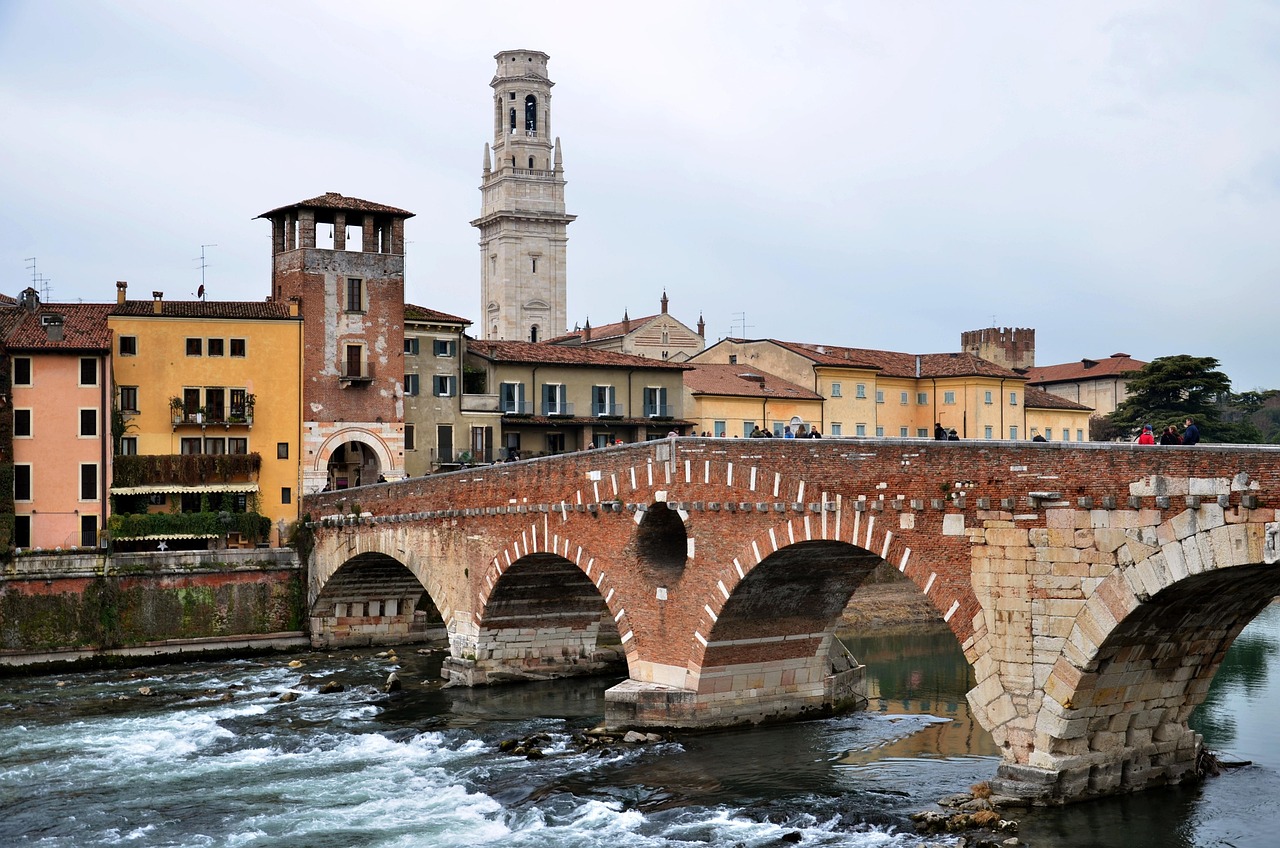
Walk west to Castelvecchio, a red-brick castle from the 1350s that holds the city’s main art museum, about 9 euro, bought at the door or free on the card. The highlights are the equestrian statue of Cangrande della Scala with its unsettling grin and the Pisanello paintings. Step onto its swallowtail-battlemented bridge, the Ponte Scaligero, which is free, then follow the Adige to the Roman Ponte Pietra. From there walk the stepped path or take the little funicular, about 2 euro, up to the Castel San Pietro terrace. That view over the terracotta roofs and the river bend is the Verona photo everyone takes home, best in the hour before sunset.
The old centre and San Zeno
Verona’s historic core is a UNESCO World Heritage Site, and wandering the marble streets is half the trip. Save time for the Basilica di San Zeno on the western edge, one of Italy’s greatest Romanesque churches, about 4 euro. Two things to find inside, Mantegna’s altarpiece above the high altar and the 48 medieval bronze panels on the doors, which read like a comic strip of Bible scenes. San Zeno is also the church where Shakespeare had Romeo and Juliet secretly wed. On the way back, the free Roman gate of Porta Borsari still stands on the old main road.
Where should you eat in Verona?
Eat one street back from Piazza Bra and Piazza delle Erbe, where you pay for the view rather than the food. A few reliable names, grouped by what you want.
Risotto all’Amarone with a serious wine list, Antica Bottega del Vino, Via Scudo di Francia 3, a 16th-century wine bar with around 4,500 labels.
Traditional Veronese in a proper trattoria, Trattoria Al Pompiere, Vicolo Regina d’Ungheria 5, known for its cured meats, tortellini in brodo and risotto all’Amarone.
Atmosphere and small plates, Ostregheteria Sottoriva 23 on Via Sottoriva, under the medieval porticoes, good for cicchetti and an ombra, a small glass of wine.
The local curiosity, pastissada de caval, a horse-meat stew, done well and cheaply at Osteria al Duca, Via Arche Scaligere 2, in the house said to be Romeo’s.
Morning coffee, Caffe Borsari, Corso Porta Borsari 15, a tiny historic bar with an excellent cappuccino.
Aperitivo, Osteria del Bugiardo on Corso Porta Borsari, Amarone by the glass from about 9 euro and a spritz from about 8.
The local plate to order is risotto all’Amarone, cooked in the region’s big red wine, and the hills around the city make the famous Amarone, everyday Valpolicella and crisp white Soave, so have a glass with dinner.
What is worth skipping in Verona?
A few honest calls to save you time and money. Skip the paid museum inside Juliet’s House, since the free courtyard is the whole experience and the rooms are thin. Do not bother queueing to rub the breast of the Juliet statue for luck, it is a modern replica and a pure tourist ritual. Avoid the restaurants with menus in six languages right on Piazza Bra, and walk a couple of minutes to Via Sottoriva instead. And try not to see Verona only as a one-hour stop between trains if you can give it half a day, because the walk to the river and the viewpoint is where it stops feeling like a film set and starts feeling like a city.
Is the VeronaCard worth it?
For most visitors, yes, and the maths is simple. The card is 27 euro for 24 hours or 32 euro for 48 hours, with free entry to more than 15 sites plus unlimited city buses and an audio guide. Add up the main paid sights on their own and you are already ahead. Here is a rough tally at solo prices.
Verona Arena, about 12 euro. Casa di Giulietta museum, about 12 euro. Torre dei Lamberti, about 9 euro. Castelvecchio Museum, about 9 euro. Basilica di San Zeno, about 4 euro.
That is roughly 46 euro before a single bus ride, against 27 euro for the 24-hour card. See three or more paid sights and it pays off, and the free buses help if you are staying out near the station. Buy it at the first museum you enter or online, and remember Casa di Giulietta still needs a booked time slot even with the card.
A one-day plan for Verona
With only a day, this order keeps the walking short and beats the coach crowds to Juliet’s House.
| When | Do this |
| From 9am | Arena at opening, then a cappuccino at Caffe Borsari on Corso Porta Borsari |
| 10.30am | Juliet’s House courtyard before the crowds, gelato at Venchi on Via Cappello |
| 11.30am | Piazza delle Erbe and up the Torre dei Lamberti for the view |
| 1pm | Lunch at Al Pompiere or Sottoriva 23, try risotto all’Amarone |
| 2.30pm | Castelvecchio and the Ponte Scaligero by the river |
| 4.30pm | Ponte Pietra and up to Castel San Pietro for the golden-hour view |
| Evening | Aperitivo at Osteria del Bugiardo, or an opera in the Arena in summer |
Seeing the best of it
Start early and keep the evening long. Do the Arena and Juliet’s House before the day-trip crowds, buy the VeronaCard if you are seeing three or more sights, and save the golden hour for Castel San Pietro. Then let the evening run over a plate of risotto all’Amarone and a glass of Valpolicella, or a night at the opera.
FAQs
See the Roman Arena, Juliet’s House courtyard and Piazza delle Erbe with the Torre dei Lamberti, then Castelvecchio by the river and the view from Castel San Pietro. Add the Basilica di San Zeno with more time, and an Arena opera in summer. Most cost 4 to 12 euro, or are free on the VeronaCard.
Yes. One day covers the Arena, Juliet’s House, Piazza delle Erbe and the Torre dei Lamberti in the morning, then Castelvecchio, the river and the Castel San Pietro viewpoint in the afternoon. Start at the Arena for 9am to beat the day-trip crowds to Juliet’s House.
For risotto all’Amarone with a big wine list, Antica Bottega del Vino on Via Scudo di Francia. For a traditional trattoria, Al Pompiere on Vicolo Regina d’Ungheria. For atmosphere and small plates, Sottoriva 23 under the porticoes. Coffee at Caffe Borsari and aperitivo at Osteria del Bugiardo, both on Corso Porta Borsari.
For most people, yes. It is 27 euro for 24 hours or 32 euro for 48 hours and covers 15-plus sites plus city buses. The Arena, Casa di Giulietta museum, Torre dei Lamberti, Castelvecchio and San Zeno alone come to about 46 euro at solo prices, so three or more paid sights and the card pays off.
The Arena Opera Festival runs from 12 June to 12 September 2026, its 103rd edition, with Aida, Nabucco, Turandot and a new La Traviata. Stone-step seats start around 30 euro, under-30s can get 30 euro stalls on many nights, and the big titles sell out early.